Friday, October 21, 2016

Black Radish Pickles

Today I made some quick refrigerator pickles with a black radish. The radish was quickly sliced and a hot pickling brine was poured over the radish slices, which had been packed into jars.

These are not canned in the traditional sense, although I used some canning jars for easy  preparation. They went right into the refrigerator and they will be ready to eat in 24hrs.

No, you're correct. It's not sewing. Sometimes most of my work week never makes it to my sewing studio. I'm thinking about sharing some of those other areas of my work life.

Tuesday, October 4, 2016

Un Chapeau


                                                                                                  et un abeille...

Tuesday, September 13, 2016

A Very, Very Basic Sewing Kit

Are you ready to put together your first basic sewing kit? You should already have the your full length mirror and you should have put together your ironing equipment.  You've cleaned out your wardrobe, created a shopping list and perhaps even have a place for clothing ideas and inspirations. Wow, you've accomplished a lot. Now let's get ready to begin to learn to sew.

Your ironing equipment should consist of an good quality iron, a sturdy padded cotton covered ironing board, a cotton or linen press cloth, a water spray bottle, and a Turkish towel.Of these basic ironing things there are several which don't necessarily need to be purchased from a sewing store or be brand new. I have already stated the linen press cloth can be an old tea towel. You'll want the smooth kind of towel and not the hand towels made from terry cloth. A water spray bottle is probably hidden about the house also. Look around and reuse items. Most everyone has an old bath towel in a light color than will serve as extra padding for your ironing. If not, check a garage sale, thrift shop, or Mom's basement for these items.

Now for the most basic sewing kit list, many of these items you may already have. Gather them up and put them all together in a box.

The Box:  Use a shoe box or an old cookie tin. Many households have old plastic containers from past organizational sprees that can be reused. You may even have a dress box or shirt box in the gift wrapping stash. If all else fails, save the cardboard box from your last mail order. My point here is: do not go out and buy things. There are plenty of holidays to come when you will need gift suggestions for your nearest and dearest. A fancy sewing box is a great gift.....AT A LATER TIME!

Image result for butter cookies tin royalty free
I can't tell  you how many times I've gone to a garage sale  and have seen an old sewing kit in one of these. Many of you will have one of these tins about the house. It's perfect for your sewing/mending kit. It's dry, dust free and you keep your tools away from your kids' crafting and any thing else going on in the house that will scatter your hard work to the four corners of the world.


 A Six or Twelve Inch Ruler: You probably have one around the house. Choose a sturdy one with clear easy to read markings. A clear plastic ruler is good. There are many fancy rulers available, but to start your sewing collection, simple is best and the kind you might send to school with your child is perfectly fine.

A Yardstick: Again, you may have one around the house. Locate it. You will need it if you hem a skirt or draw a long line on fabric for home decorating. 

Image result for 60" sewing vinyl tape measureA 60" Vinyl Tape Measure: This is an absolute necessity. If you never move your sewing beyond sewing on buttons and fixing hems, you still need to know what size you'll need when ordering things. Buy the best quality vinyl tape measure you can afford from a good sewing store. Do not rely on the tape measure included in prepackaged beginner sewing kits as they are generally only 36" and that is not adequate.  A five foot measure is far more useful.

Image result for glass head straight pinsPins: I would choose a box of glass head  pins for a beginner. They are easy to see on the floor and easy to see in the fabric and easy to use for the untrained and awkward beginner hand. They will not rust and the glass heads will not melt when you accidentally iron them. If your pins do not come in a box, find a small container from the household that will served to hold them. A tin lozenge container comes to mind or a small plastic food storage box will serve just as well.
Image result for hand sewing needles
Needles: Right next to the display of pins will be needles, buy a small assorted selections. Ten to twenty needles will last a lifetime for a mending kit.

Image result for fabric scissorsScissors: An entire blog post could be written about scissors and internet memes exist about unfortunate family members who use a sewist's dedicated scissors for something other than fabric. There is one simple rule for fabric shears. USE THEM FOR FABRIC AND THREAD ONLY! This means a dedicated pair of dressmaking shears and they are an expensive investment, if you are buying quality. Quality 8" dressmaking shears start at $30 and move up from there. Save this as a gift suggestion and know that the best shears will last you for a lifetime.
              For an absolute beginner, however, I recommend buying a new pair of $10-$15 dollar dressmaking shears from the large sewing store or online. If you are particularly budget minded, a new pair of "orange" handled scissors from the office supply store will be just fine. The point, here, is that they are new! Don't go to the kitchen drawer and re-purpose old scissors. Even the new "orange" scissors will suffice for cutting fabric for your first six or seven projects before becoming to dull. By that time, you will know if sewing is going to be a long term love or a see ya' later frustration. At that time, you can make the investment for new high quality shears and "retire" your old scissors to be your paper scissors in the sewing room. If you are saying goodbye to sewing then your basic sewing kit can remain in its' box as a simple home mending kit. It will be ready and stocked for all your small clothing emergencies.
Image result for seam gaugeSeam Gauge: A seam gauge can be found in any reasonably sized sewing notions department. Buy one with clear markings. This useful little tool will help you to set hems and size seams. You can use a ruler for these jobs, but a seam gauge can be set to the called for width and you can mark and move along without re-reading the measurement. It will be inexpensive, even for a good quality one and a worthwhile addition to your sewing kit.

Image result for fray checkFray Check: This can be a life saver, if used properly. The trick to this is the old adage, "A stitch in time saves nine." In other words, catching a small torn seam, hole or fray at the first sight will only require a stitch or two and a drop of  fray check and you will have saved the garment. Ignoring your mending, wastes your precious clothing dollar.
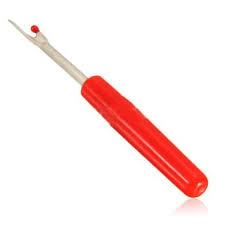
Image result for seam ripperSeam Ripper: A seam ripper does exactly as the name implies. You will use this to open sewn seams and pick out mistakes. It happens to all of us, even experienced sewers keep their seam rippers right next to their scissors. There are many shapes and styles. Choose one that suits you. They do dull after a time and need to be replaced, but not that often.

Image result for assorted safety pinsSmall Assortment of Safety Pins: Very useful for holding things together, re-threading strings through casings, and pinning bra straps to the undersides of blouses. Keep them in another small box. Don't mix them in with your pins.

Small Assortment of Buttons: I actually don't think you should buy an assortment of buttons, but rather find a small container and begin saving your own buttons. Those extras that come with your coat and get put in a drawer and lost. They belong here. A shirt you have torn beyond repair should be salvaged for its' buttons. The same with other clothing that is going in the garbage. Look them over for buttons, hooks and eyes and reusable zippers. You will be amazed at what you can save from your cast offs.

A mechanical pencil: I suggest a mechanical pencil because it remains sharp all the time. Keeping extra lead in you sewing box will help you if you end up doing a lot of sewing.

Image result for chalk pencil for sewingA chalk pencil: Sewers chalk and erasable markers both fall into the fabric marking category. For a beginner a chalk pencil will help you make marks on dark fabric or fabric which you might not want to get wet.

Image result for erasable marking pens sewingAn erasable sewing marker: An erasable marker, works well on light colored fabric and is removed by water. Usually, after finishing a garment, I'll wash the marks out in the laundry. But you can also remove them with your spray water bottle at the iron. A marker will be under $5 and often you can get them on sale. It is a luxury item, but extremely useful.

Assorted Thread: For your basic sewing kit, your should choose some spools of sewing thread. Choose small spools in basic colors. I would suggest white and black thread at the minimum, then depending on your own wardrobe colors add others. Begin by considering khaki or beige, navy, grey, and red. Thread for growing children's school uniforms in the proper colors would be a smart choice also.
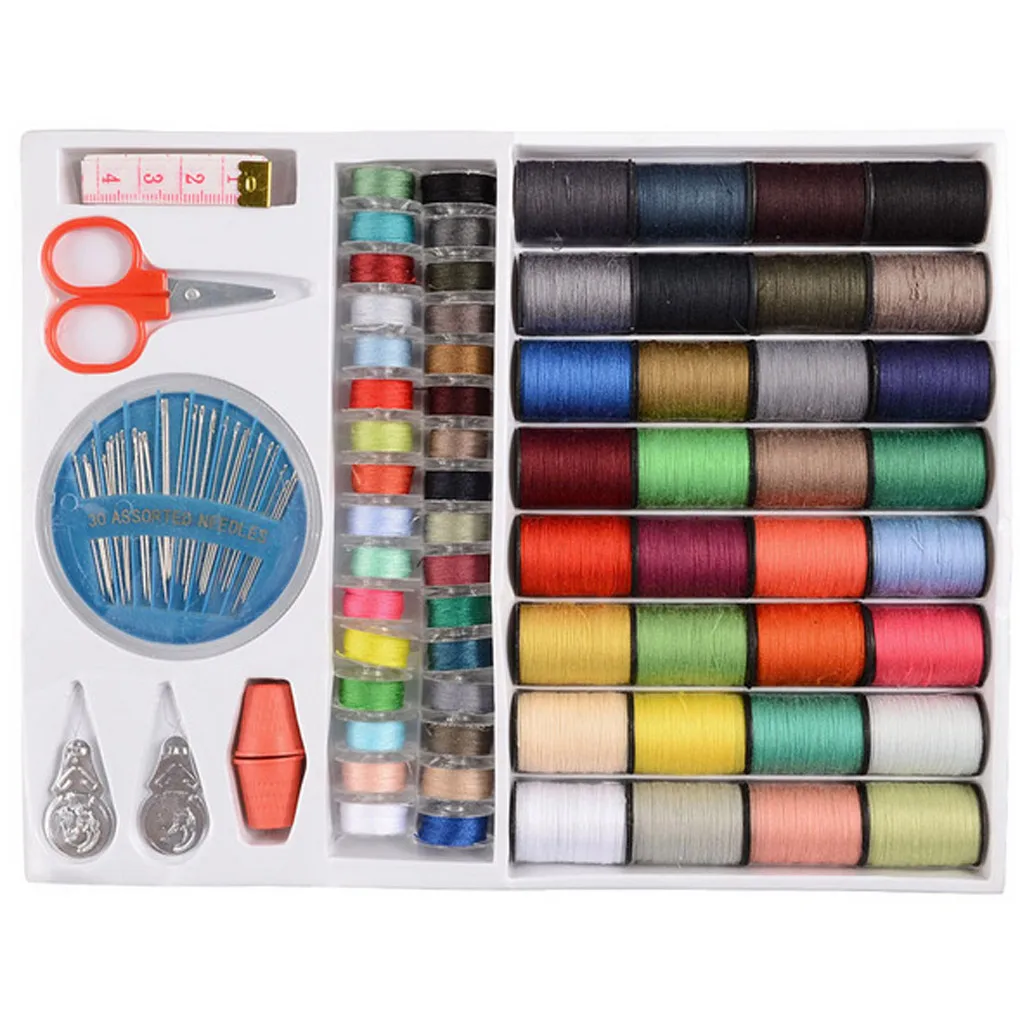

Image result for assorted threads for sewingA final word about prepackaged sewing kits...just don't! Rarely are all the components of good quality and rarely are these a good buy. Just put it down and buy the best individual items you can afford from the list above. You will have a kit you can use for a lifetime and a very good start on your sewing room supplies.


Sunday, August 28, 2016

New Skirt New Look 6583

The summer sewing really hasn't been too bad despite having to service all the sewing machines and taking a vacation that was twice the normal length.

Here's a tulle skirt project. I really like the fully gathered tulle skirts shown with casual tees and denim jackets. The effect is a little too young for me, but this is an attempt to bring the look to a more grown up ensemble. I chose a grey tulle with a sedate silver grey lining.


I used New Look 6583 as a pattern except I added two very deep box pleats; one each side of center on the front and on the back. The pleats gave more fullness to the  skirt at the hem while remaining flat and trim at the waist. This was quick sewing project. I have made this skirt several times. I hardly need to look at the instructions any longer. 

Now that I've got the tulle skirt, the up to the minute look of a tee shirt and denim is just not me and far too youthful. I think a different kind of blouse is called for here. Hmmmm....off to stash!

Wednesday, August 17, 2016

Salvaging a Wadder

At the beginning of the year, I made a shirt dress from Butterick  B6091 and I discussed what I liked and didn't like about the pattern here. I put the dress in my closet and it felt frumpy every time I wore it. It was fine for wearing while making beds and washing dishes but I never felt like leaving the house in it. I decided to do something about it this summer.

 The original pattern had four godets inserted into the skirt. I took those out and closed the seams. This took the fullness out of the skirt and balanced out the mistake of taking too much out of the bodice length for my short-waisted-ness.
After that, I dealt with the collar detail. The original pattern had the collar come right to the end of the collar stand. This is fine if you are never meant to button the stand, however, the pattern called for a button and buttonhole on the collar stand. The result was messy and can be seen in a photo on the original post for this dress in January. Since I had a sewn button hole in one side of the collar stand and no more leftover fabric, my options were limited. I opened the stand and carefully removed the collar, shortened it and reset the collar seam and stand.
I wish I could have rounded the collar stand corner, but this was impossible due to the buttonhole. The collar now lays neatly even when closed.

Below are two photos of the finished redesigned dress. The left on "Judy" and the right on me. I'm much happier with the dress, but not thrilled enough with the pattern to declare it my "keeper" shirt dress pattern. I'll keep looking!


Tuesday, August 16, 2016

In the end...

I settled for a fabric acquisition road trip AND guilt about my growing fabric stash AND the courage to make a video!

Friday, August 12, 2016

Back on the blog again.

This summer has been a bit of a bust in terms of sewing. I have not done much other than mending countless items of household linens. It is a desperate attempt to keep the household going without buying European sized linen at sky high prices and then having to remake the items to fit our American beds. That re-cutting process seems truly wasteful and as we are hoping to return home soon, I keep mending.

Along with the mending, my machines have slowly begun to show their need for a professional tuneup. I have keep them going for nearly eight years by a meticulous routine of cleaning, oiling, and small adjustments as well as the attitude of "if I can hand sew it, don't use the machine!" Finally, they all ground to a halt and they had to go to the machine doctor.

Like much that surprises me here on the continent, there is good and bad. Traffic is terrible. Health care is fabulous! Customer service in stores stinks but you can order a repair part for just about anything and it comes to your door! I was dubious  about contacting a sewing machine technician as my machines were all 110V power and my Bernina 930 is worth more "dead" than alive for its spare parts alone.

But! Belgium has its charm and one of them is a sewing machine technician that makes house calls! Yep! House calls! Yes, it did cost me a little extra, but he serviced all three machines in my home connected to my power transformers in about an hour and a half one early evening after his store closed. The house call was arranged within a week after contacting him by email through his business address.  Yowza! I'm back in business. I might even be up for a fabric acquisition road trip or maybe some more guilt about the growing stash.

Thursday, June 9, 2016

The Slim Chemise Dress Again!


I've worn this several times since the last post. It's growing on me. It's extremely versatile and easy to wear.


Overall, I'll put this first complete pattern draft into the success column. I'm also will to go back to Vogue's New Book for Better Sewing and try another project. I'm thinking about Vogue 7101, the sheath dress.  Although, this one scares me a bit, because again, the poor girl hasn't eaten and I like to eat all too much. More lettuce, please!

Wednesday, May 25, 2016

Finally, I've nailed it!

I've had some time to get back to my copy of Vogue's New Book for Better Sewing. I've worn my two previous versions of the Slim Chemise Dress and tossed one of them out because the fabric was just not right for the project. Sometimes, only wearing an outfit for awhile will tell me what is wrong with it. I suppose this mostly falls from the fact that I sew for myself and by myself. I don't have another knowledgeable sewer nearby for fitting help, so fitting problems drag on for months in my studio. Enough about what ails me and let's move on to a minor accomplishment.

I am finally happy with my drafted version of Vogue 7231 - The Slim Chemise Dress. I finally understood the problem with the collar and pulled grain line of the front slashed opening. Below is a "photo" of the dress again in a navy blue linen. It is a comfortable dress that is easy to wear. It falls into the casual dress category and I am very pleased with the navy blue.

The grey plaid dress and the light blue linen dress have been pulled from the wardrobe. The grey became a wadder project and the light blue is in the "well...the yardage is good pile". This keeps the net gain to the closet in the negative territory.

Friday, May 20, 2016

How old is that skirt?

That skirt is nearly thirty years old! I would date it to the late 1980's. I wore it before my son was born because afterwards I was never that small in the waist again. Now here it is again, straight out of storage and on the sewing room floor. Fitting problems aside, this is an excellent example of being generous with your sewing budget and buying the best and most conservative fabric your money can buy.

This skirt is wool and at that time of the 1980's, skirts were long, full and generous. There's a lot of yardage in that skirt. The wool was of decent quality and it has stored well and the plaid is timeless. Grey, black and burgundy are still part of my winter wardrobe colors. So, how can I get this skirt back into the closet and stretch the money I spent thirty years ago even farther? I started by picking the old skirt apart and discarding the original waistband. I cut a new waistband off the bottom hem edge of the skirt, thus shortening the length. I am heavier now and cannot carry off yards of wool nearly ankle length any longer. Shorter skirts are more attractive for me.


 The pleats were originally knife edged going all around the waistband. Lucky girl that I was thirty years ago, those pleats fell flat across my tummy and hips. No Longer! or rather "In My Dreams" would this work today. I contemplated making this a straight skirt, but I have one hip that is 1 inch higher than the other. Horizontal stripes on the bottom half always running up hill or down and this would be particularly noticeable if there was no fullness in the skirt. So the answer for plaids is some fullness and today's answer for fullness is the box pleat. To the left is the made over skirt, I can't really say new, can I? Sure I can. Ta da! A "new skirt" has been added back to my closet as a wearable item.
I've paired it with one of my "orphan" garments. This is a black tweed wool blazer, that refuses to wear out. Together these items will form a new core group in my winter wardrobe. I have some grey tweed pants already and a burgundy pullover sweater. I think I need to purchase a new black turtleneck and I have some burgundy silk for a blouse in my stash. A very soft grey blouse would be lovely also, but must be very light grey for me. So there....one lonely black blazer and some grey tweed pants are starting to collect some wardrobe "friends".

Old Cookbook Menus

These two days of menus come from a 1945 cookbook written by Vera Bradely. The book has an entire years worth of suggestions for three meals...